
Nova Verta · Downdraft
Nova Verta Raptor
Filter kit, alternatives, and current pricing for the Raptor.
Fitment data is being verified. Our team is still cross-referencing manufacturer specs for the Raptor. Confirm filter sizes with WERCS before ordering: request a fitment confirmation.
Nova Verta model • Raptor
Nova Verta Raptor Filter and Airflow Program
Filter upkeep matched to the Raptor's direct-fire, efficiency-focused downdraft design, with sizes confirmed per cabin before bulk kits ship.
Direct-fired heating is the efficiency play in booth design: booth air passes directly through the burner's heat rather than across a heat exchanger, so nearly all the fuel's energy lands in the airstream. Nova Verta positions the Raptor in that series, meaning operating cost was engineered at the airflow level, and airflow is what filters control. Every point of added restriction from loaded media claws back some of the efficiency the design paid for. This page treats the Raptor's filters the way its design does: as the maintenance item that decides whether the booth runs at its rated economy.
Quick answer
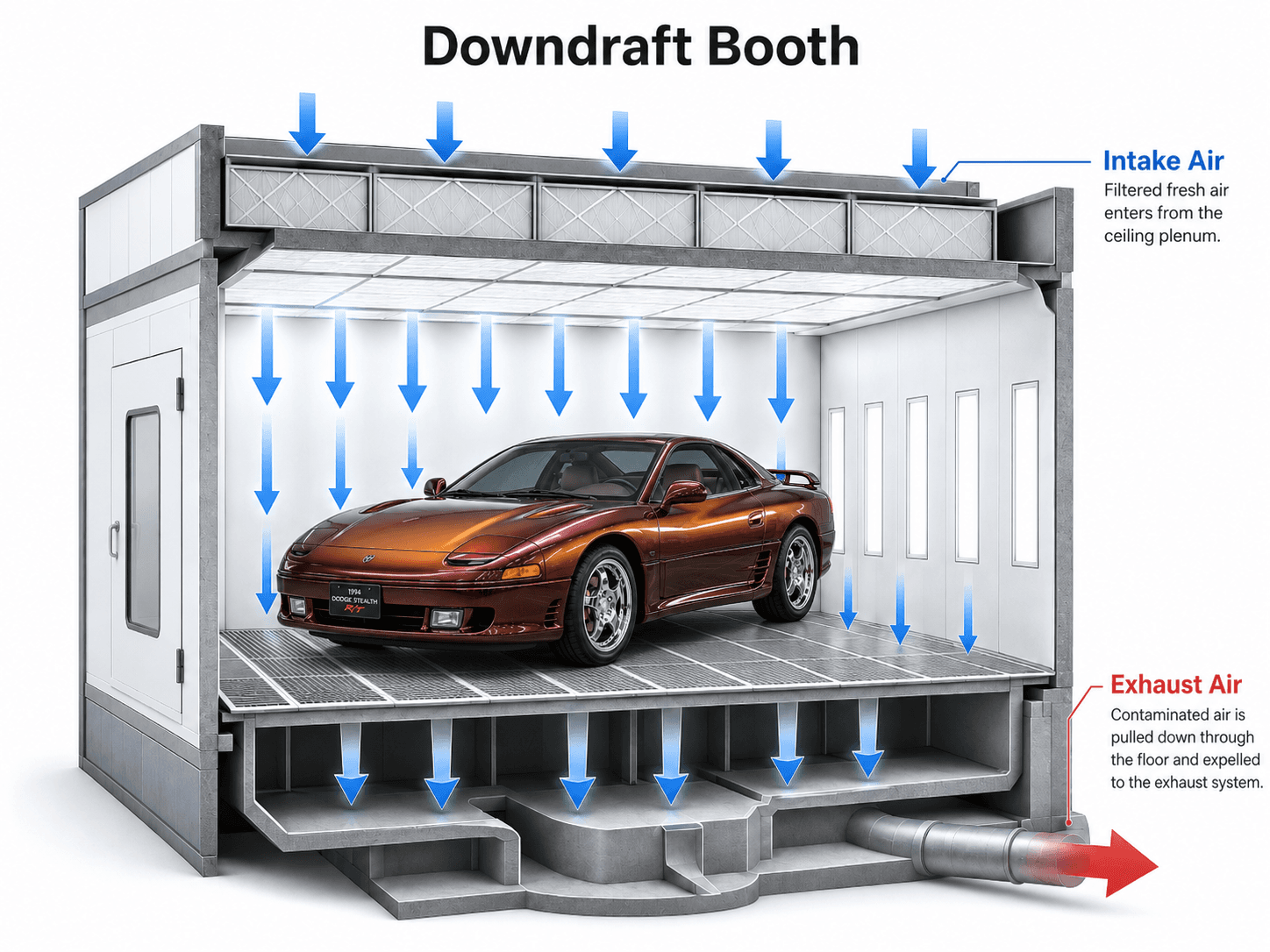
Nova Verta documents the Raptor as part of its direct-fire, energy-efficient booth series, and on a direct-fired downdraft the filters are part of the energy system, not just the cleanliness system. Restricted media raises static pressure, the fans work harder to hold design airflow, and the heat package runs longer to hit the same cure temperatures. The Raptor's filter program follows the downdraft layout: ceiling intake diffusion media plus floor-level exhaust arrestors. Our fitment record for the Raptor is in verification, so exact sizes and counts are confirmed per cabin through a fitment check or quote, with media matched from distributor and manufacturer catalog cross-references.
How Raptor shops choose filters
Intake plane. The ceiling grid carries diffusion media that does double duty on a direct-fired booth: it evens out the descending air curtain for finish quality, and it presents a predictable resistance the air handling was balanced around. Replace the ceiling as a full set and keep the grade consistent between changes; swapping media grades mid-stream changes the pressure profile the booth was tuned to. Raptor ceiling dimensions and counts are confirmed per cabin while our record completes verification.
Exhaust plane. Floor arrestor media takes the overspray load, and its condition is the largest single variable in the booth's day-to-day static pressure. Fiberglass pad is the standard fill; polyester suits waterborne-heavy schedules. On an efficiency-positioned booth the gauge-driven change interval is worth actual money: a blinded exhaust bed makes the fans and the burner both work harder for every job in the cycle.
Fuel math. Track differential pressure and gas usage across one filter cycle and the correlation shows up in your own utility data. Shops that set exhaust intervals off the gauge instead of the calendar run flatter energy costs, the whole argument for a standing media cadence.
Regulatory landscape
Direct-fired heat changes nothing about the paperwork and adds one operational note. OSHA 29 CFR 1910.94(c) still governs spray-zone ventilation, and NFPA 33 still treats overspray accumulation in the exhaust path as a fire load; both effectively require the filter discipline described above. EPA 6H applies where target-HAP vehicle refinish coatings are sprayed, bringing filtered-exhaust and maintenance-documentation duties. The direct-fire note: because booth air moves through the heat source's airstream, maintaining design airflow is also a combustion-safety matter, and the burner controls assume the ventilation the filters permit.
Who runs the Raptor
Raptor buyers skew toward operators who did the utility math. High-throughput collision shops in cold climates, where make-up air heating dominates winter operating cost and a direct-fire series was chosen specifically to cut it. Production refinish operations running long daily spray hours, where even small static-pressure penalties compound across shifts. And newer shop builds where the Raptor was part of an efficiency-first equipment package; these shops usually want consumables on subscription from day one so the booth's as-commissioned airflow numbers never drift for lack of media on the shelf.
Raptor filter FAQs
Do dirty filters really raise my gas bill on a direct-fired booth?
They raise the load on the whole air system. As media blinds, static pressure climbs, airflow sags or the fans work harder to hold it, and the burner runs longer to keep setpoint during spray and cure. Fresh media restores the resistance the system was balanced for.
Are Raptor filter sizes published anywhere on this site?
Not yet. The Raptor record came from manufacturer documentation and is in our verification queue, so we confirm dimensions and panel counts per cabin through the fitment check before bulk orders. Once your cabin is measured, your sizes are on file permanently.
Does a direct-fired booth need different filter media than a heat-exchanger booth?
The media types are the same: diffusion media in the ceiling, arrestor media in the exhaust. What differs is the cost of neglect, since airflow restriction on a direct-fired booth shows up in fuel consumption as well as finish quality. Buy the same proven media, change it on the gauge.
My Raptor takes longer to reach cure temperature than it used to. Filters or burner?
Check the filters first, and check them with the differential pressure gauge rather than by eye. Slow temperature rise with high differential pressure across loaded media is an airflow problem you can fix today with a change-out. Slow rise with fresh media and normal pressure readings points at the burner or controls, which is a service call.
Can I put my Raptor on the same delivery schedule as my other booths?
Yes, and you should. Each booth keeps its own verified fitment record and its own interval, but deliveries consolidate to one cadence with kits labeled per booth. Mixed-brand shops run this way as standard practice.
Sources
Primary references cited on this page.
- Nova Verta Raptor manufacturer product pagehttps://novavertapaintbooths.com
- NFPA 33, Standard for Spray Application Using Flammable or Combustible Materialshttps://www.nfpa.org/codes-and-standards/nfpa-33-standard-development/33
- OSHA 29 CFR 1910.94(c), Ventilation: spray finishing operationshttps://www.osha.gov/laws-regs/regulations/standardnumber/1910/1910.94
Related on BoothFilterPro
- All Nova Verta models
Brand hub
- Super Prestige
Sibling Nova Verta model
- Conquer
Sibling Nova Verta model
- Standard Downdraft
Sibling Nova Verta model
- Prestige
Sibling Nova Verta model