
Junair · Downdraft
Junair eBooth 63A
Filter kit, alternatives, and current pricing for the eBooth 63A.
Fitment data is being verified. Our team is still cross-referencing manufacturer specs for the eBooth 63A. Confirm filter sizes with WERCS before ordering: request a fitment confirmation.
Junair model • eBooth 63A
Junair eBooth 63A Filter Program
Electric heat makes clean airflow an operating-cost issue, not just a finish issue. Media for the eBooth 63A, confirmed to your booth before shipment.
Electrification reached the spray booth market for the same reasons it reached everything else: sites without gas service, decarbonization targets, landlords and jurisdictions tightening on combustion equipment. The eBooth is Junair's answer, and the 63A is how that answer shows up in a working shop. What does not change with the heat source is the downdraft air path or the media that manages it. What does change is the economics around it: electric heat tends to make operators newly attentive to every source of energy waste, and the two filter-shaped energy wastes in any heated booth are fan energy fighting loaded media and paid-for heated air thrown away faster than necessary.
Quick answer
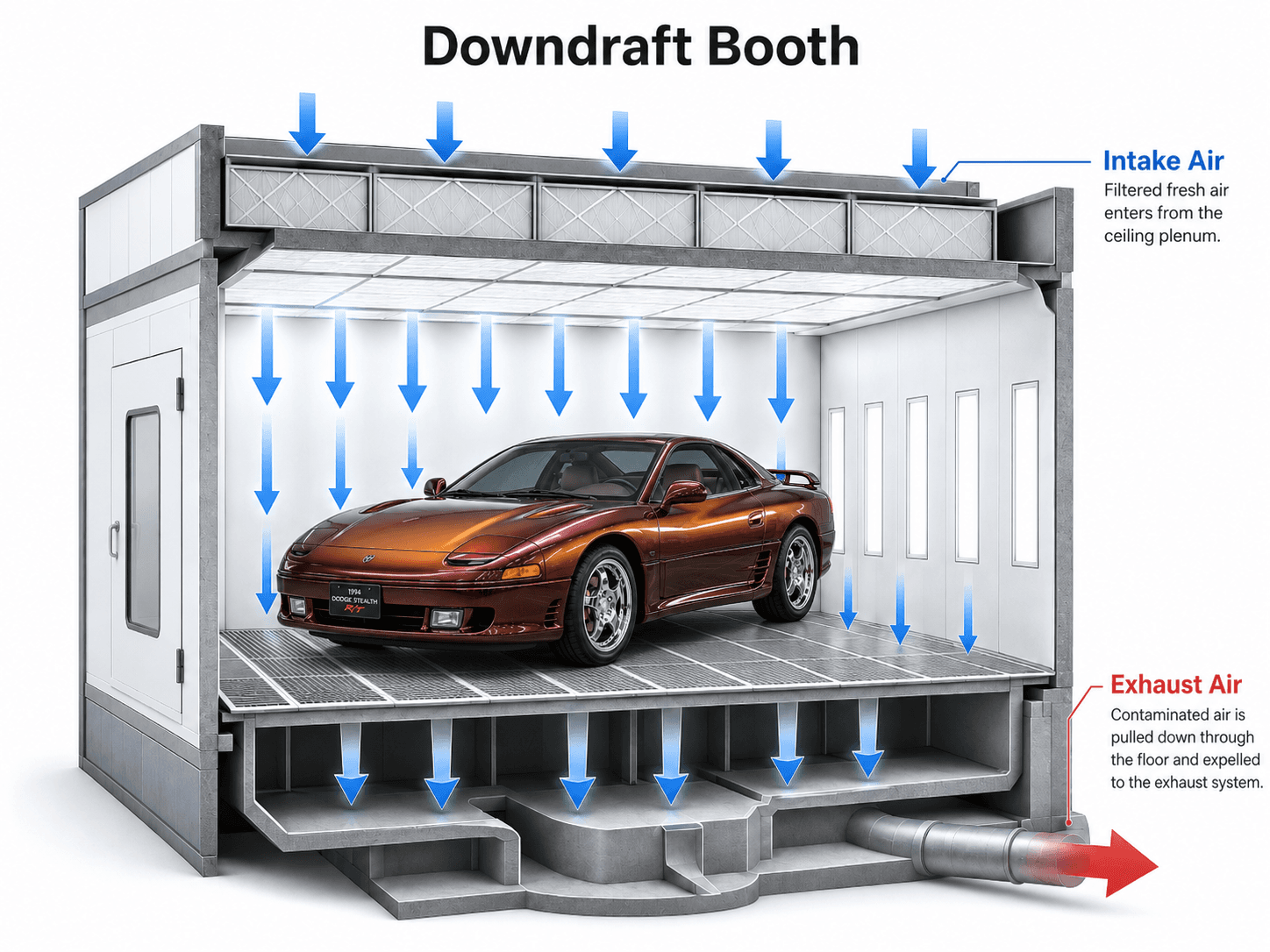
Junair's eBooth 63A is the electric-heat entry in its downdraft booth range: no gas burner, with the booth's process heat carried electrically instead. Filtration-wise it is a downdraft, so the program is ceiling diffusion media on the intake side, arrestor media at floor level on the exhaust side, and pre-filter media protecting the air handling package. Every kilowatt-hour you pay to heat air makes airflow restriction from loaded filters a direct operating cost. The eBooth 63A is catalog-documented pending field verification with us, so a fitment check confirms your sizes before bulk media ships.
How eBooth 63A shops choose filters
Why electric heat sharpens the filter argument. A booth heats enormous volumes of make-up air, and that conditioned air passes through your filters once and leaves. When exhaust arrestor loads up, the fan works harder against the restriction; when the ceiling blinds, airflow distribution suffers and cure conditions wander. In an electrically heated booth those inefficiencies land on the utility bill you watch most closely. Fresh media is the cheapest energy efficiency measure the booth offers.
Intake and exhaust program. The ceiling carries full-coverage diffusion media, the last stage before air reaches the paint. Floor-level exhaust takes fiberglass or polyester arrestor by loading behavior and change-interval preference. Pre-filter media guards the air handling and heating package; keeping dust off electric heating elements and coils is the same protective logic as guarding a burner, applied to different hardware.
Sizing. The dossier for the eBooth 63A documents the model in Junair's current range without recorded dimensions, panel counts, or a verified slot map, so we run the honest play: fitment check first (nameplate, one ceiling panel measurement, one exhaust pad measurement), then a locked record and frictionless reorders. Do not order eBooth media off another Junair model's sizes.
Regulatory landscape
Dropping the gas burner does not drop the paperwork. EPA 6H (NESHAP Subpart HHHHHH) attaches to spraying automotive coatings, not to the heat source, so filtered exhaust and maintenance records still apply. OSHA 1910.94(c) governs the ventilation side of spray finishing regardless of how the air is heated. NFPA 33 still matters too: the combustible material in a spray booth is the coating and its accumulated overspray, so loaded arrestor media remains fire load even in an all-electric booth. A dated filter change log serves all three masters.
Who runs the eBooth 63A
The eBooth 63A draws a distinctive buyer. Shops in buildings without gas service, or in urban and leased spaces where adding combustion equipment is a permitting fight not worth having. Operations with corporate or municipal decarbonization mandates, including fleet refinish facilities working toward electrified plant. And forward-planning independents pairing solar or favorable electric rates with an all-electric shop build. All three tend to be numbers-driven owners, which makes them the easiest audience for the case that filter cadence is an energy line item.
eBooth 63A filter FAQs
Does electric heat change which filter media I need?
No. Media selection follows the airflow layout and your coatings, not the heat source. The eBooth 63A runs standard downdraft media: ceiling diffusion, floor arrestor, pre-filters for the air handling package. What electric heat changes is the cost of ignoring them, since restricted airflow wastes electrically heated air.
What does the 63A in the name refer to?
The dossier we hold documents the model name without decoding it, so we will not guess on a spec page. What matters for filter purposes is confirmed at fitment: the booth's physical slot dimensions, panel counts, and exhaust layout, none of which you can read out of a model designation anyway.
Are eBooth filter sizes verified in your catalog?
Not yet field-verified; the model is documented from Junair's published range and flagged accordingly. First orders include a fitment confirmation, which takes a nameplate photo and two measurements. Your record is then locked and subsequent orders ship on sizes we both trust.
Will fresher filters actually lower my electricity use?
Directionally, yes. Loaded media raises static pressure, and the fan system works against that restriction whenever the booth runs; blinded ceilings also disturb the airflow the heating system was sized around. We will not put a number on savings for your booth, but running media past its pressure-drop point always costs energy in a heated downdraft.
Can I run the eBooth 63A on a longer change cycle to save money?
Stretching cycles saves media cost and spends energy, finish quality, and compliance posture. The better lever is media choice, like higher-holding polyester arrestor on exhaust, which extends intervals without running dirty. Set the cadence with your spray volume during the quote conversation and adjust off manometer readings, not off the calendar alone.
Sources
Primary references cited on this page.
- Junair eBooth 63A manufacturer product pagehttps://www.junair-spraybooths.co.uk/products/spray-booths/
- OSHA 29 CFR 1910.94(c), Ventilation: spray finishing operationshttps://www.osha.gov/laws-regs/regulations/standardnumber/1910/1910.94
- NFPA 33, Standard for Spray Application Using Flammable or Combustible Materialshttps://www.nfpa.org/codes-and-standards/nfpa-33-standard-development/33