
Junair · Downdraft
Junair 9 Series
Filter kit, alternatives, and current pricing for the 9 Series.
Fitment data is being verified. Our team is still cross-referencing manufacturer specs for the 9 Series. Confirm filter sizes with WERCS before ordering: request a fitment confirmation.
Junair model • 9 Series
Junair 9 Series Filter Guide
A downdraft at the top of Junair's range needs all three filter stages cycled together. Here is the program, confirmed to your booth before you commit to bulk.
Sitting alongside the 7 Series at the top of Junair's booth ladder, the 9 Series is specified by shops that treat the spray booth as a production asset rather than a painted room. At this end of the range the filtration argument changes: the question is less "what fits" and more "what cadence keeps this booth inside its pressure window while cars keep moving through it." Junair sells into the UK and North American markets (as JBI in some of them), and the filter program travels the same way everywhere: media by stage, sizes by verified measurement.
Quick answer
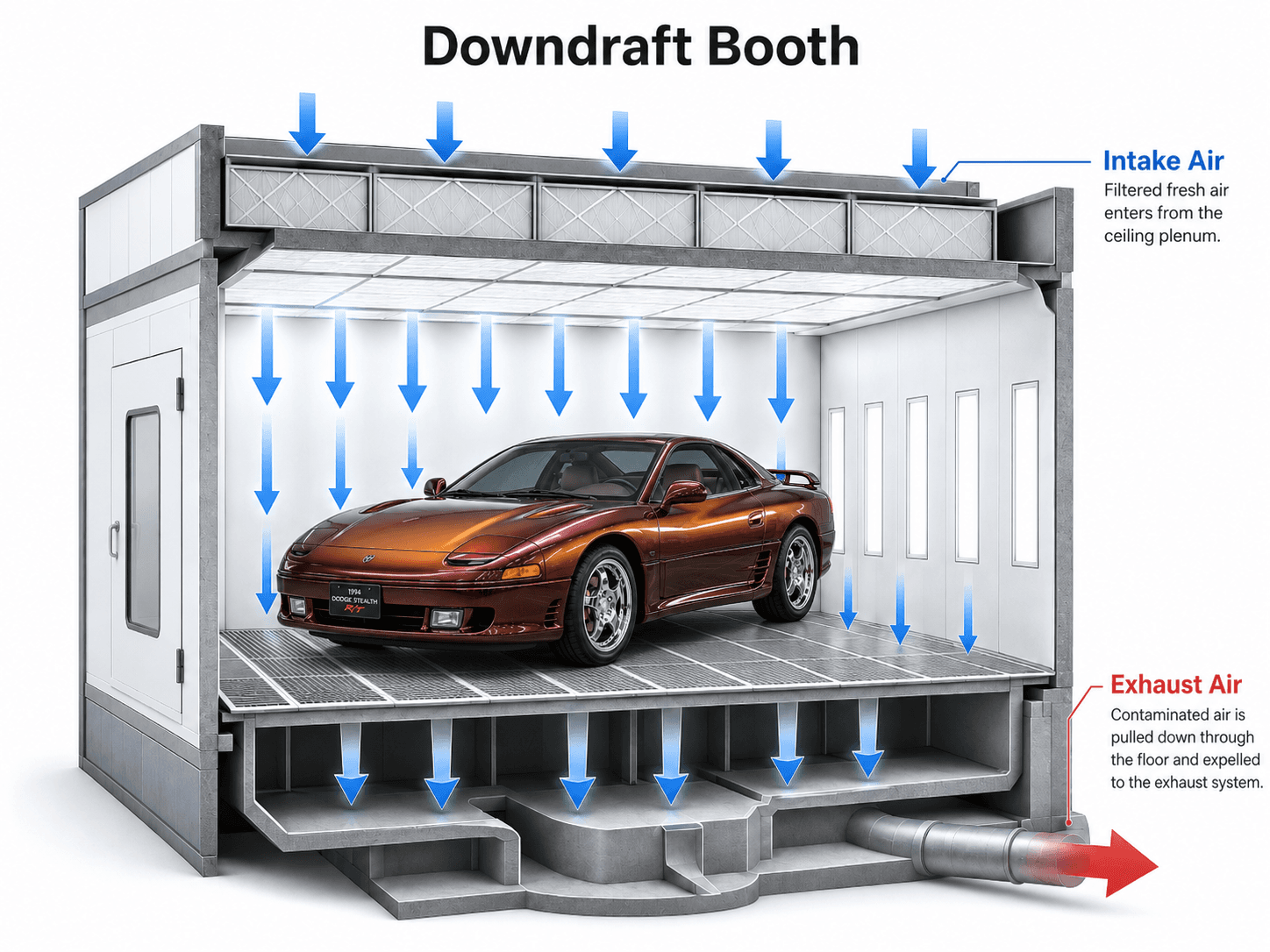
Air in a Junair 9 Series moves one way: down. This is a downdraft booth in the upper tier of Junair's catalog, which means ceiling diffusion media on the intake side, arrestor media at floor level on the exhaust side, and pre-filter media protecting the air make-up unit. Buying filters for it is a three-stage decision, not a single SKU. The 9 Series is catalog-documented in our system and flagged for fitment verification, so panel and pad dimensions get confirmed against your actual booth through a quick fitment check before a bulk order ships.
How 9 Series shops choose filters
The vertical column. Everything about downdraft filtration follows from the air column. Clean, heated air enters through the full-ceiling media, washes down over the vehicle, and carries overspray into floor-level exhaust arrestor. If either end of that column is starved (a blinded ceiling blanket or a loaded exhaust pad), velocity drops, the column breaks up, and you get the classic complaints: dust in finish, fog hanging at bumper height, doors hard to open.
Ceiling stage. The 9 Series ceiling runs diffusion media whose job is fine filtration plus even air distribution. Since the dossier for this model does not record ceiling dimensions or panel counts, we hold ceiling sizes for a fitment confirmation: one measured panel or a clear grid photo is enough to lock the record for all future orders.
Exhaust and AMU stages. Floor exhaust takes fiberglass or polyester arrestor sized to the pit or grid layout, chosen by the coatings you spray and how fast you want to be changing pads. Ahead of the fan and heat source, AMU pre-filter media keeps shop dust out of the air handling package. Cycle math worth internalizing: exhaust arrestor turns over fastest, ceiling media slowest, and the pre-filter rides in between, so a single "change everything together" habit wastes money on one stage and starves another.
Regulatory landscape
A 9 Series spraying automotive refinish coatings almost always sits under EPA 6H (NESHAP Subpart HHHHHH), which obligates filtered exhaust and maintenance records regardless of how premium the booth is. OSHA 1910.94(c) sets the ventilation baseline for spray finishing, and it is enforced against measured performance, so filter neglect can turn a compliant booth into a citation. NFPA 33 adds the fire marshal's view: accumulated overspray in exhaust media is combustible loading, and a dated change log is the cheapest evidence of control you can hold during an inspection.
Who runs the 9 Series
Three buyer profiles dominate 9 Series ownership. Production collision centers running booth-limited schedules, where a blown filter cadence shows up as missed cycle-time targets within the week. Dealer-group body shops standardizing equipment across locations, who want one filter program with per-booth verified sizes instead of a parts-bin lottery. And premium refinish or restyling operations that bought at the top of the range for finish quality and treat ceiling media as a finish input, changing it before the gauge forces the issue.
9 Series filter FAQs
What is the difference between 7 Series and 9 Series filters?
Both are downdrafts at the top of Junair's range, so the stage layout is the same: ceiling intake, floor exhaust, AMU pre-filter. Dimensions and panel counts are booth-specific, and neither model's slot data is field-verified in our catalog yet, so each booth goes through its own fitment check. Never assume media from one Junair model transfers to another.
My 9 Series doors got hard to open. Filters?
That is a pressure imbalance symptom, and filters are the first suspect. A loaded exhaust arrestor makes the booth go positive; a blinded ceiling or intake path makes it go negative and pulls doors shut hard. Swap the most-loaded stage, recheck at the manometer, and only then look at dampers or fan issues.
Do I really need to change the AMU pre-filter if the booth seems fine?
Yes. The pre-filter fails silently: the booth looks fine while dust load builds on the fan and heat exchange surfaces behind it. It is the least expensive media in the program and skipping it converts a consumable cost into an equipment repair.
Can you ship a full 9 Series filter kit today?
We can quote and ship media by stage once sizes are confirmed. Because this model is catalog-documented but pending field verification, the first order includes a fitment confirmation step. After that, your sizes are on file and reorders ship without friction.
Which exhaust media should I run for waterborne basecoat work?
Waterborne and high-solids systems tend to load fiberglass arrestor quickly. Polyester arrestor typically holds more overspray before pressure drop climbs, which stretches the change interval. The right answer depends on your volume and coating mix, which is exactly what the fitment and quote conversation settles.
Sources
Primary references cited on this page.
- Junair 9 Series manufacturer product pagehttps://www.junair-spraybooths.co.uk/products/spray-booths/
- EPA 40 CFR Part 63 Subpart HHHHHH (NESHAP 6H)https://www.epa.gov/stationary-sources-air-pollution/national-emissions-standards-paint-stripping-and-miscellaneous
- NFPA 33, Standard for Spray Application Using Flammable or Combustible Materialshttps://www.nfpa.org/codes-and-standards/nfpa-33-standard-development/33