Eagle · Downdraft
Eagle DSD
Filter kit, alternatives, and current pricing for the DSD.
Required filters
Recommended kit for this booth
2 matched filters across 3 slots.
Complete kit total · $346.52
Intake side (clean air going in) (2 slots)
AMU pre-filter
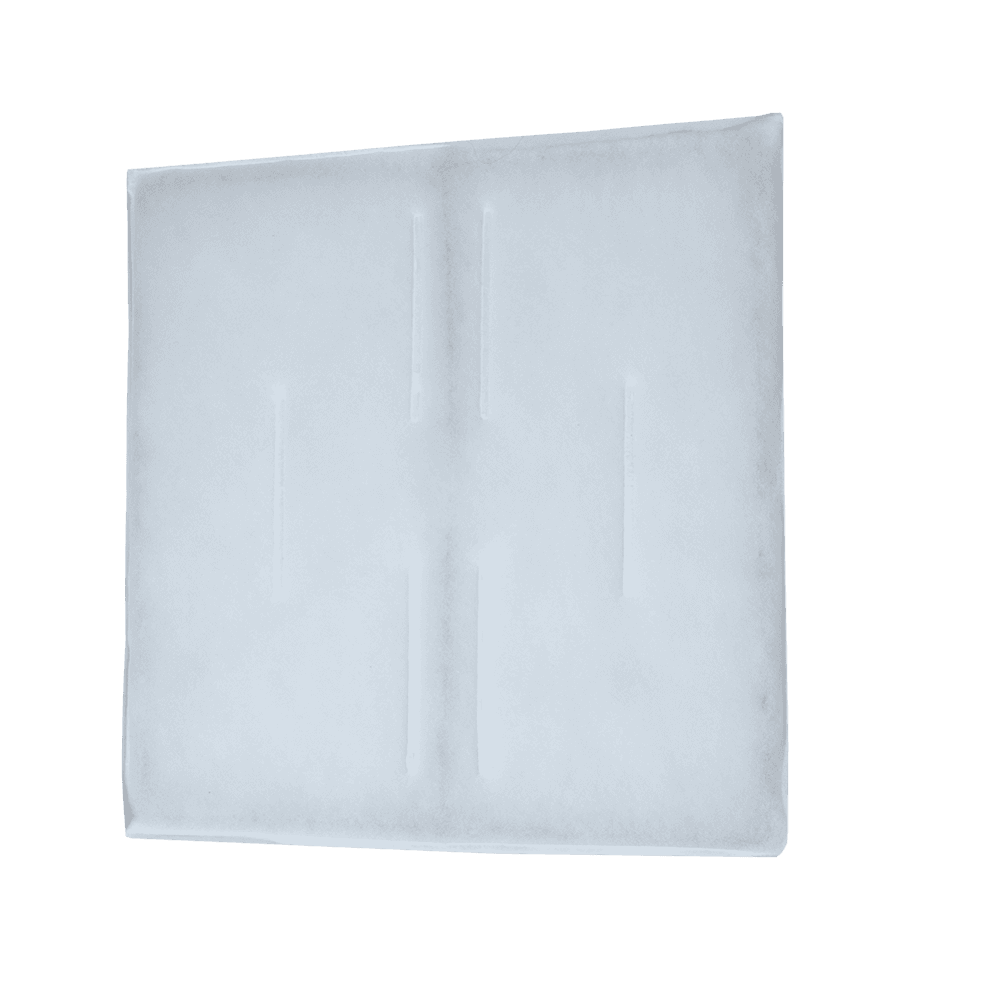
Pleated AMU pre-filter panel · 20x72
Special order · 1–2 weeksAFT 3-Ply Link Prefilter 25x72
BFP-PP-AFT-3PL-2072· 60–90 day cycleWas $262.83$223.41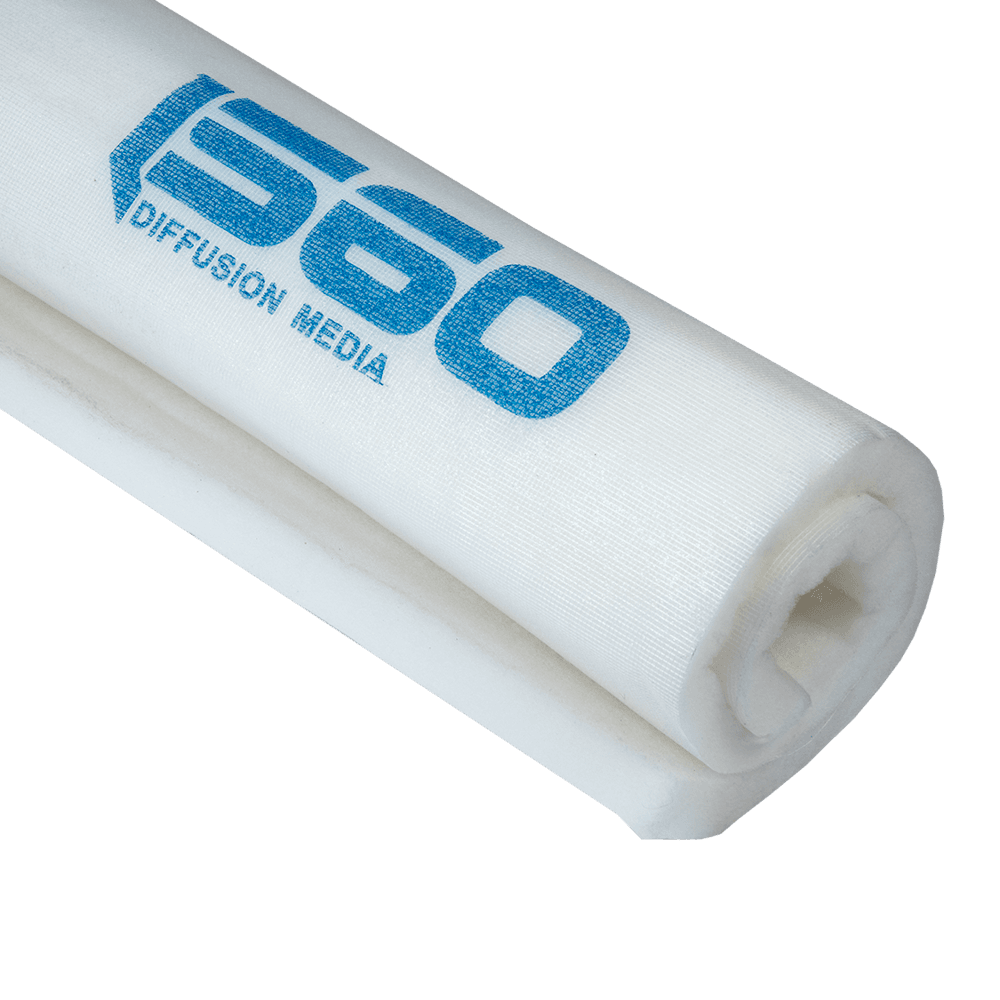
Ceiling intake
Ceiling diffusion polyester · 48x57.5
Special order · 1–2 weeksFiltrair FF560GX 48x56 Ceiling Diffusion (PA560G-10)
BFP-CD-FILTRAIR-4856· 30–60 day cycleQuote on request
Exhaust side (overspray coming out) (1 slot)
Pit exhaust
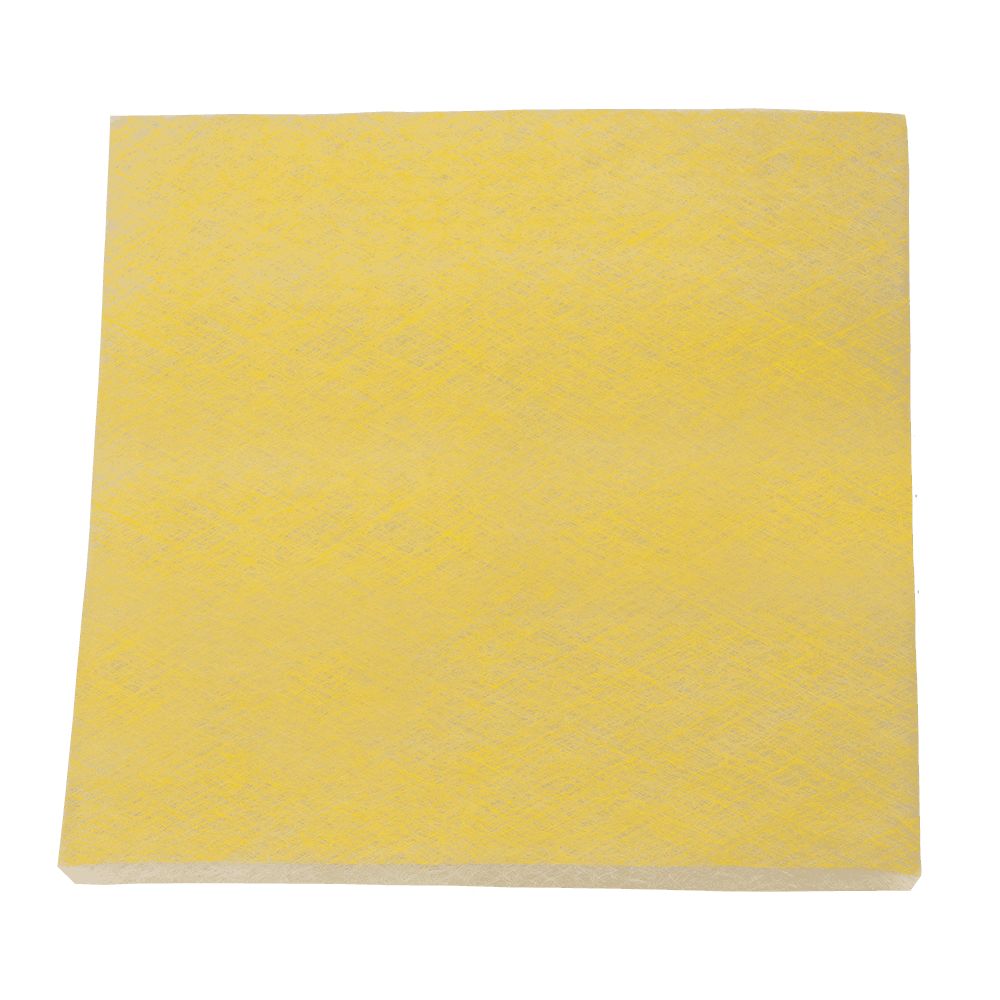
Fiberglass exhaust arrestor · 20x20
Special order · 1–2 weeksAFT 15-gram Fiberglass Pad 20x20
BFP-FG-AFT-15G-2020· 7–14 day cycleWas $144.84$123.11
Not finding the right match?
We carry many filters beyond what's shown here. Tell us about your booth and we'll send you a price and ship ETA within one business day.
Don't see your filter? Request a quote →Eagle model • DSD
Eagle DSD Filter Program
Four-panel ceiling diffusion, pocket and link AMU prefilters, and 20 x 20 fiberglass exhaust pads for Eagle's DSD downdraft, documented across three catalog sources.
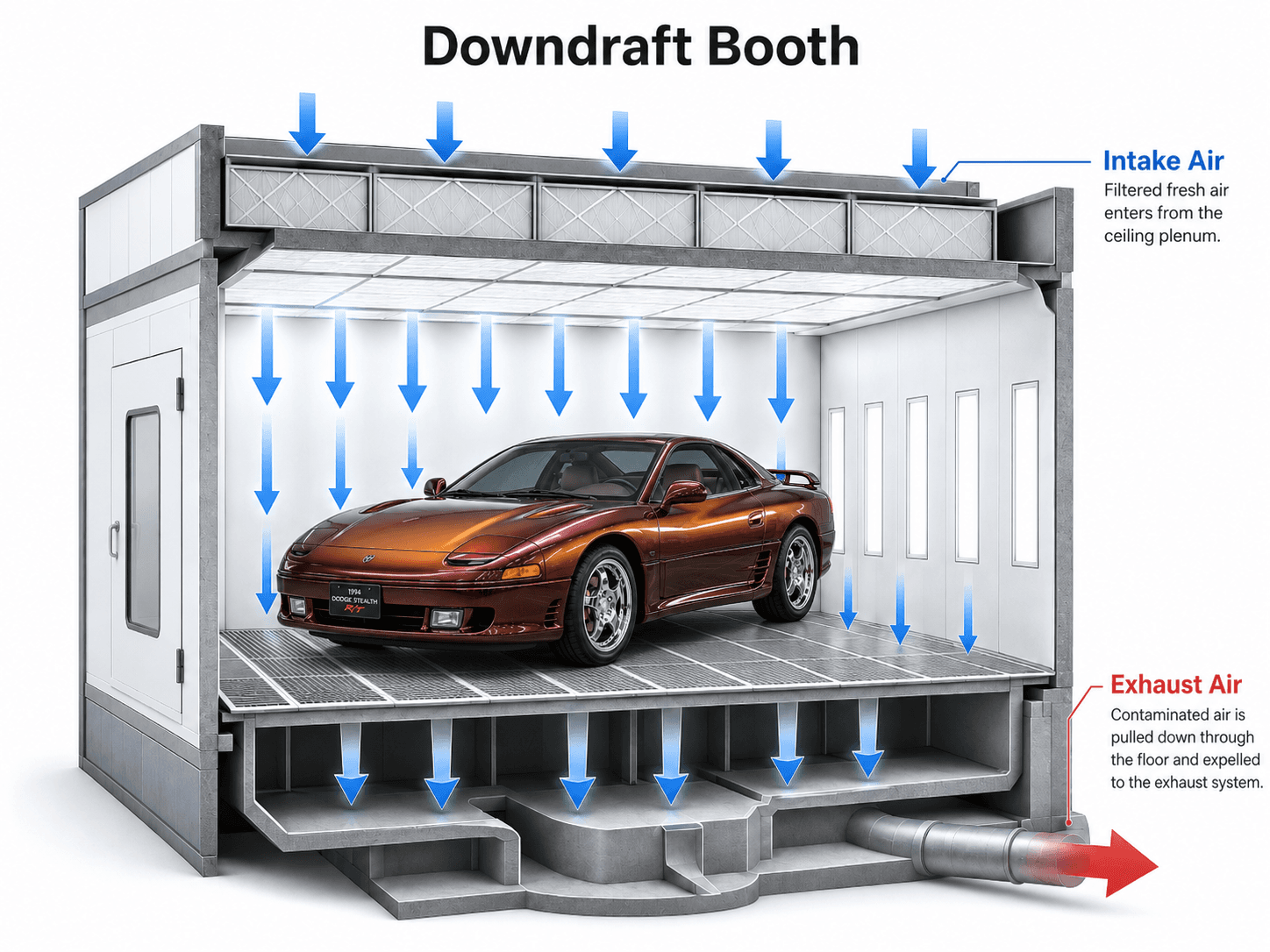
Top down, straight through the car, out at the floor: the DSD is a true vertical downdraft, and everything about its filter program follows from that geometry. Air enters through the ceiling plenum, so the four diffusion pads up top are the last thing the air touches before it reaches wet paint, making them the finish-quality filters. Overspray leaves at floor level through the exhaust grid, so the small-format arrestor pads down low are the capture filters that regulators care about. In between, the make-up air unit's prefilters decide how long the expensive ceiling media lasts. Get the three stages on their own correct cadences and a DSD holds a clean, even pattern over the vehicle for years.
Quick answer
The Eagle DSD is a downdraft spray booth from Eagle Spray Booths, documented in filter catalogs with a four-panel ceiling. The ceiling runs polyester diffusion pads at 48" x 57.5" (with a 48" x 56" Filtrair FF560GX alternative documented), the make-up air stage takes pocket bag or 3-ply link prefilters, and the exhaust grid runs 20" x 20" fiberglass arrestor pads. The record is built from a three-source catalog cross-reference. Confirm your grid counts with a fitment check before ordering by the case.
How DSD shops choose filters
Intake ceiling. Four pads cover the plenum. The documented matches are the 48" x 57.5" polyester ceiling pad (SKU 700-282) and the Filtrair FF560GX diffusion filter at 48" x 56" (SKU 0256048564). The half-inch difference between the two reflects nominal versus trimmed catalog sizing for the same slot family, which is worth confirming against your frames once before you standardize.
Make-up air. Two documented styles: pocket bag prefilters at 20" x 50" (SKU 154-070, six per case) and 20" x 72" (SKU 154-074), and non-tacky 3-ply link prefilters in matching 20" x 72" (SKU 0162520726) and 20" x 50" (SKU 0165205010) sizes. Pockets hold more dust between changes; links cost less per change. Either way, this stage is what keeps the ceiling pads from loading early.
Exhaust side. 15 gram fiberglass paint arrestor pads at 20" x 20" (SKU 14AGP202050). Pre-cut pads in a small format make exhaust changes on the DSD a fast job with no roll-cutting: pop the grid, swap the set, log the date. Change the full grid at once so face velocity stays even across the exhaust opening.
Regulatory landscape
A DSD in a collision shop almost certainly falls under EPA NESHAP 6H, which requires spraying in a filtered booth maintained per specification, with documentation. OSHA 1910.94(c) covers the ventilation function itself: the booth must keep pulling design airflow during spray work, and loaded exhaust pads are the most common reason a downdraft quietly stops meeting that. NFPA 33 treats the overspray captured in those 20" x 20" pads as combustible material, so spent pads need proper disposal and the grid area needs to stay free of buildup. A dated change log for all three stages is the cheapest compliance tool a shop can own.
Who runs the DSD
Eagle booths are working-shop equipment, and the DSD base reflects it. Independent collision shops running one booth hard, where the four-pad ceiling and pre-cut exhaust pads keep maintenance inside a lunch break. Regional MSO locations that inherited mixed equipment across sites and want each booth's filter spec pinned down to SKUs. And light industrial finishers, cabinet and parts painters, who bought a DSD for its straightforward layout and need media matched to heavier, higher-solids coatings rather than automotive base and clear.
DSD filter FAQs
What ceiling filters does the Eagle DSD take?
Four polyester diffusion pads, documented at 48" x 57.5" (SKU 700-282) with a 48" x 56" Filtrair FF560GX equivalent (SKU 0256048564). Both belong to the same slot family; measure one of your frames to confirm which trim your grid seats best.
Should I run pocket bags or link media in the make-up air unit?
Both are documented for the DSD in 20" x 50" and 20" x 72" sizes. Pocket bags carry more dust-holding capacity, which suits dusty sites and long change intervals. Link prefilters cost less and change faster. Match the style to whichever your AMU rack was built for, then choose on economics.
How often should the 20 x 20 exhaust pads be changed?
By condition and pressure, not by the calendar alone. When booth pressure drifts or the pads show heavy face loading, change the full set. Spot-swapping individual pads unbalances face velocity across the grid and drags overspray toward the fresh pads.
How do I tell a DSD from an Eagle SDD before ordering?
Look at where the exhaust grids sit. If air exits through a pit or grated floor area under the vehicle, you have the downdraft DSD. If the exhaust grids run along the lower side walls, that is the side-downdraft SDD, which shares ceiling sizing but is a separate model record with its own page.
How confident is this fitment record?
It was discovered through a three-source catalog cross-reference, which is strong agreement for a catalog-discovered model, but no technician has measured your specific booth. Run one fitment check to lock your counts and trims, and the record does the rest.
Sources
Primary references cited on this page.
- NFPA 33, Standard for Spray Application Using Flammable or Combustible Materialshttps://www.nfpa.org/codes-and-standards/nfpa-33-standard-development/33
- EPA 40 CFR Part 63 Subpart HHHHHH (NESHAP 6H)https://www.epa.gov/stationary-sources-air-pollution/national-emissions-standards-paint-stripping-and-miscellaneous
- OSHA 29 CFR 1910.94(c), Ventilation: spray finishing operationshttps://www.osha.gov/laws-regs/regulations/standardnumber/1910/1910.94
Related on BoothFilterPro
- All Eagle models
Brand hub
- SDD
Sibling Eagle model
- DD / EDD
Sibling Eagle model