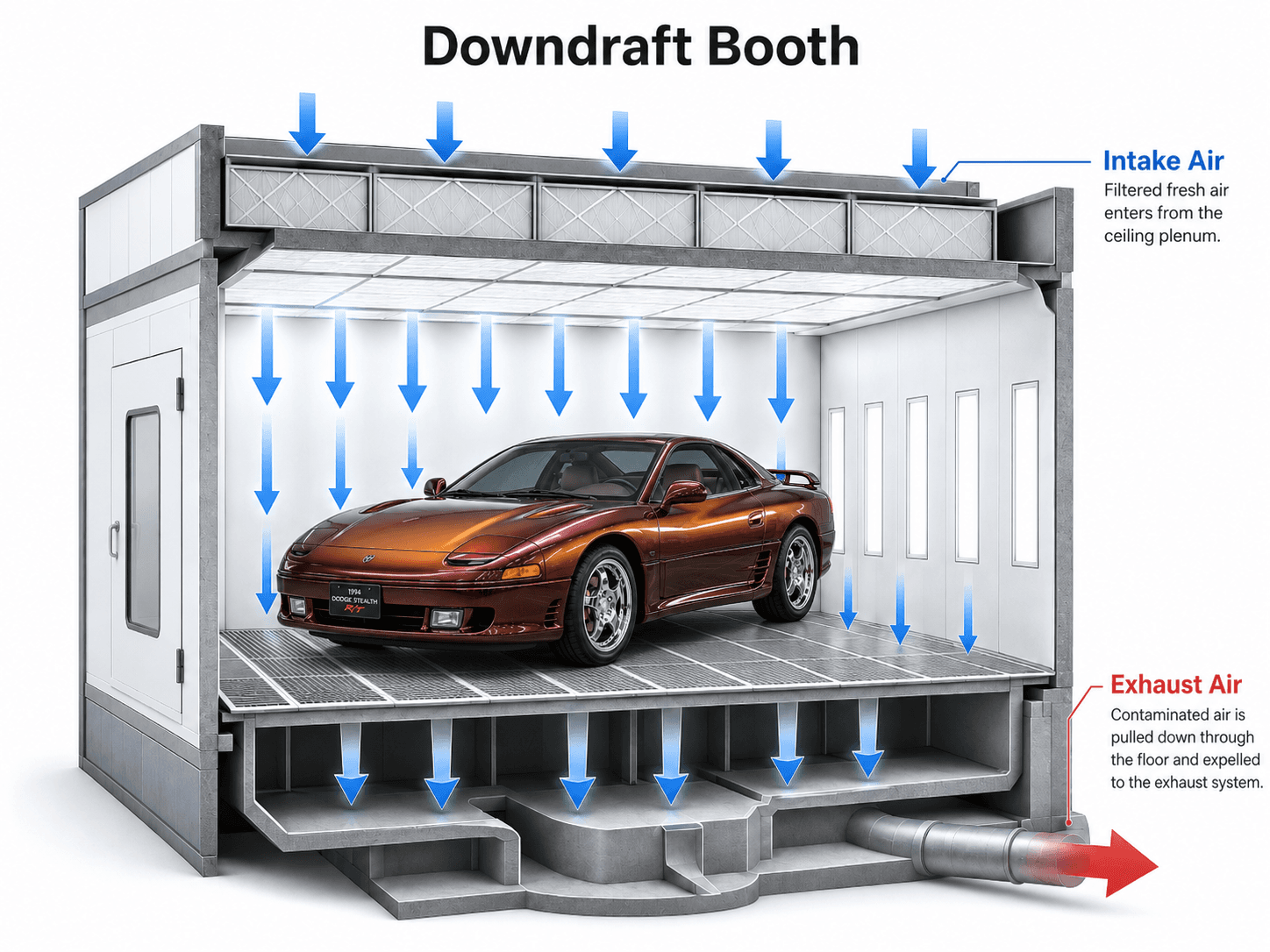

DeVilbiss · Downdraft
DeVilbiss 2000
Filter kit, alternatives, and current pricing for the 2000.
Required filters
Recommended kit for this booth
4 matched filters across 6 slots.
Complete kit total · $785.08
Intake side (clean air going in) (3 slots)
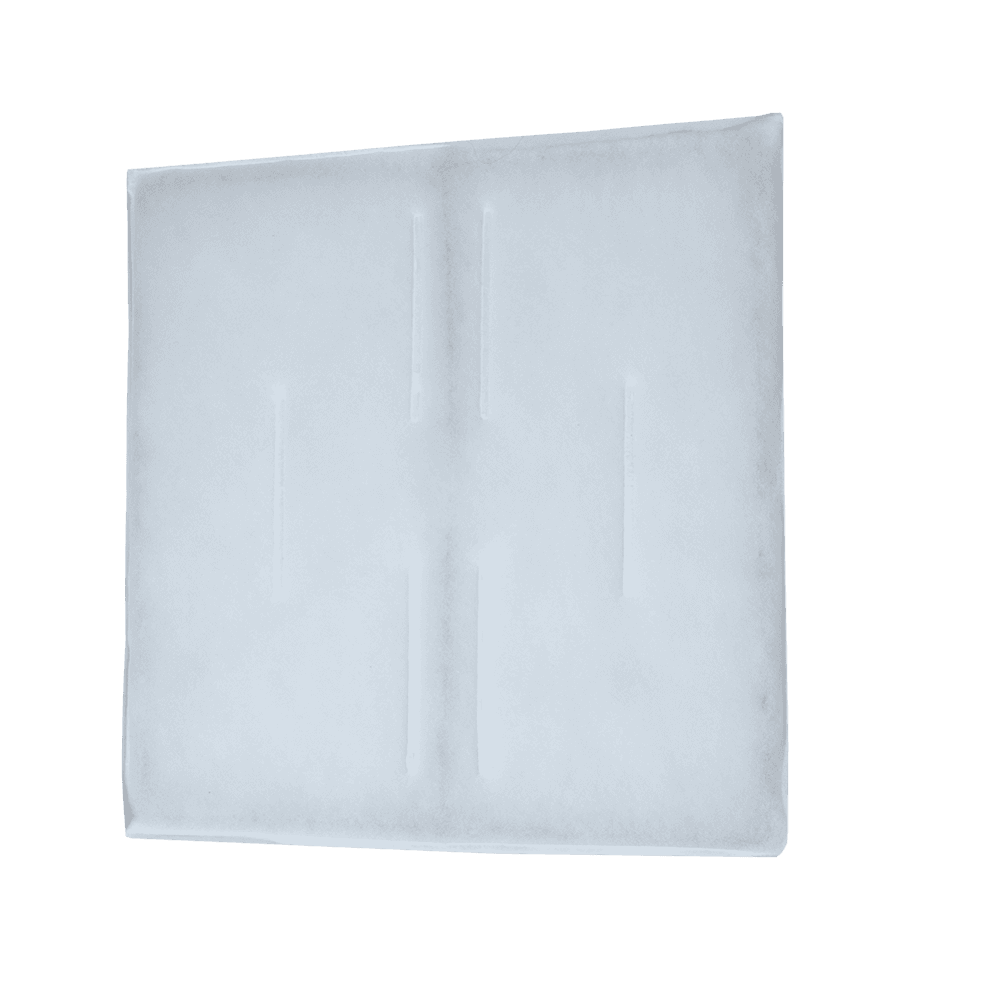
AMU pre-filter
Pleated AMU pre-filter panel · 25" x 72"
Special order · 1–2 weeksR 2/4 Panel-Linked
010-061Was $262.83$223.41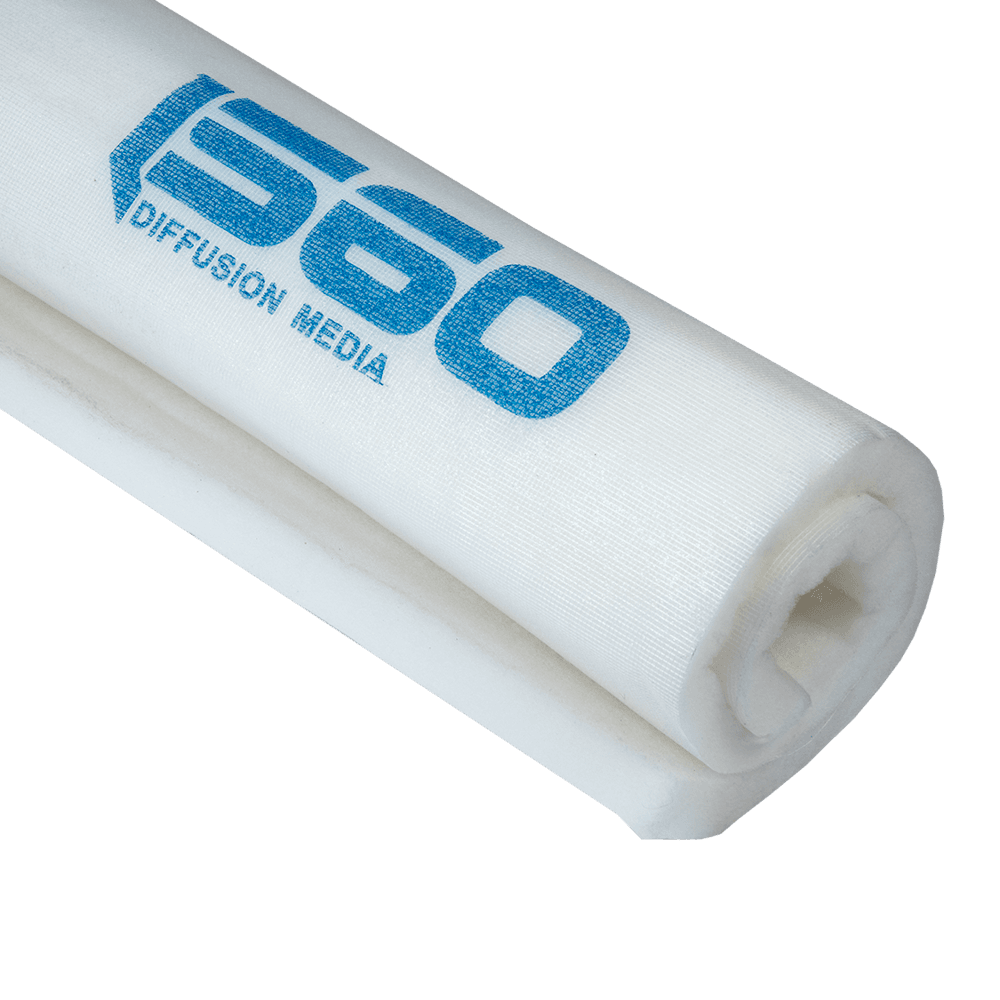
Ceiling intake
Ceiling diffusion polyester · 20" x 48"
Special order · 1–2 weeksPA 560 G-10 Intake Panel - Solid
561-032Quote on request
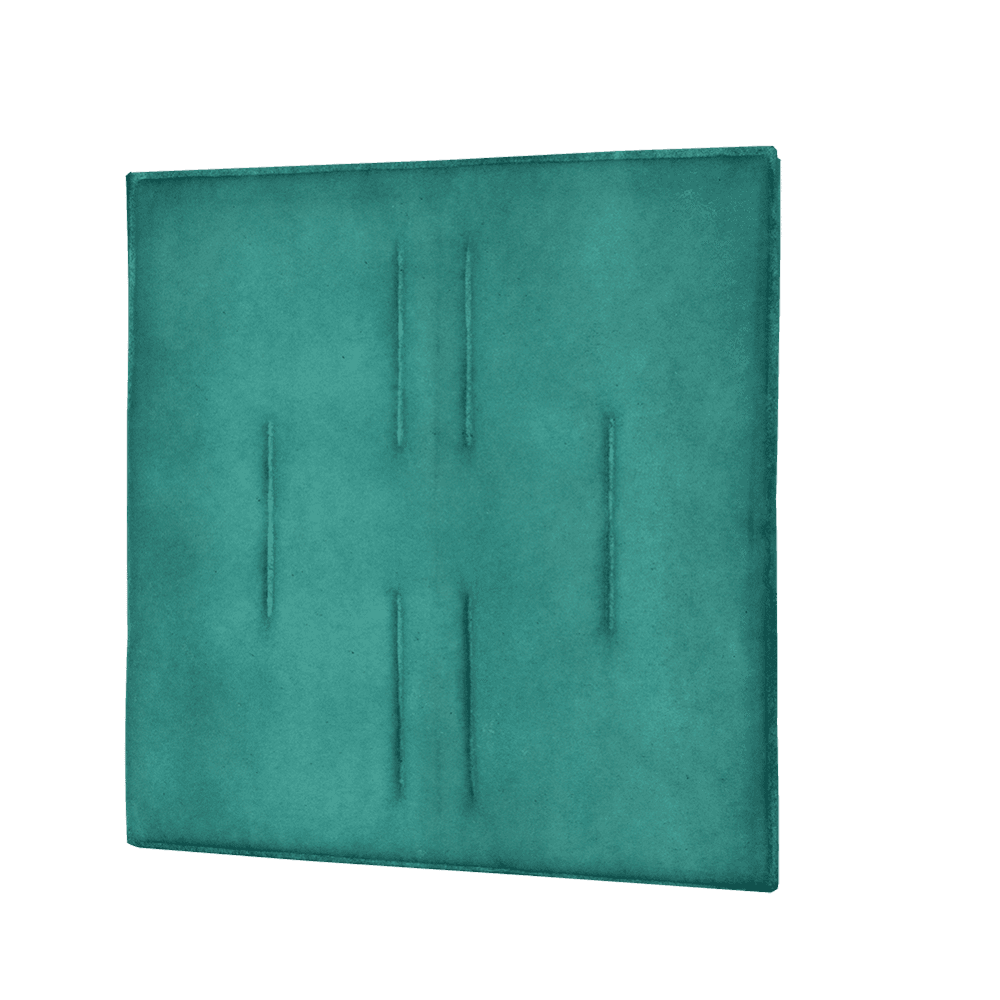
Intake Ceiling Panel
Tackified intake panel · 20x48
Special order · 1–2 weeksAFT AFR-1 Single-Frame Ceiling Filter 20x48 (24/CS)
BFP-IP-AFT-AFR-2048S· 60–90 day cycleWas $191.67$162.92
Exhaust side (overspray coming out) (3 slots)

Pit exhaust
Fiberglass exhaust arrestor · 30x300ft
Special order · 1–2 weeksAFT 22-gram Fiberglass Roll 30x300ft
BFP-FG-AFT-22G-30R· 7–14 day cycleWas $309.41$263.00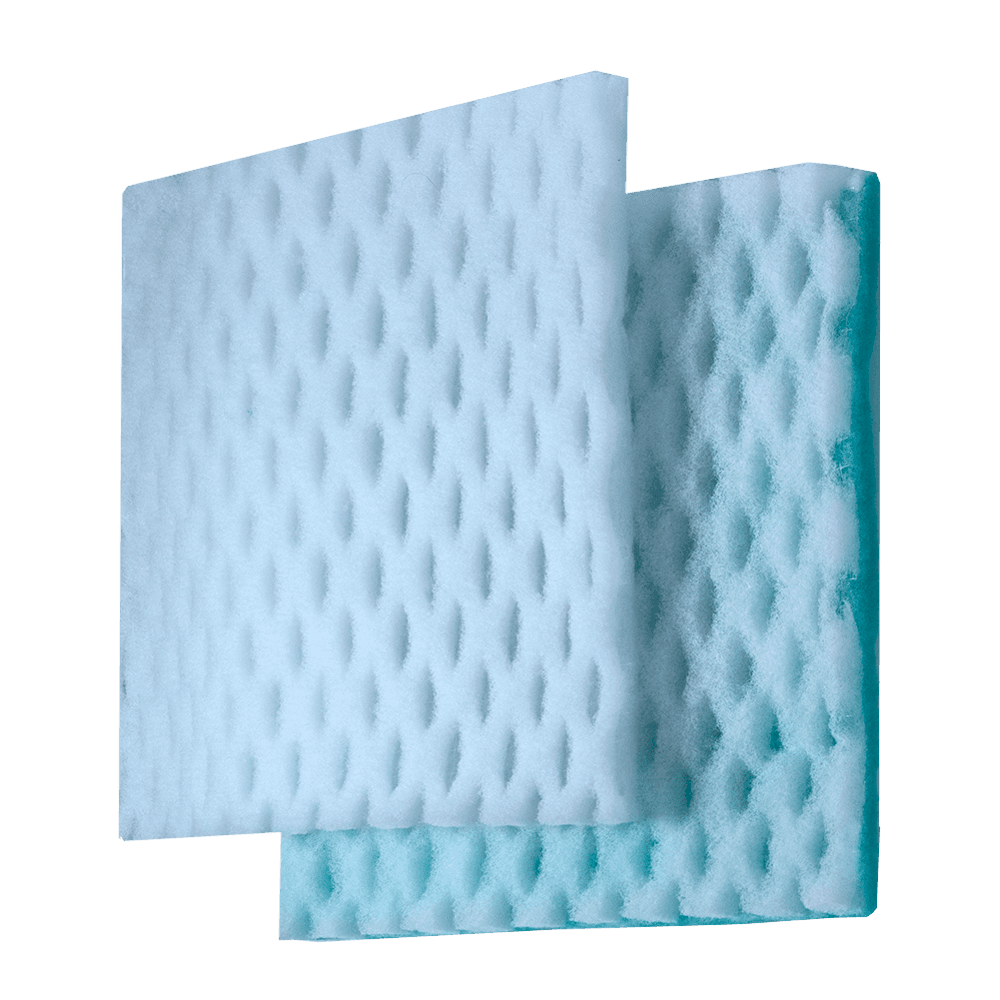
Exhaust Secondary
Pocketed paper arrestor · 32x21
Special order · 1–2 weeksAFC Paint Pockets 1.5in Synthetic Multi-Layer 20x20
BFP-PP-AFC-2020· 7–14 day cycleWas $159.71$135.75Wall exhaust (grid)
Fiberglass exhaust arrestor · 32" x 21'
Special order · 1–2 weeksXHD Poly Back Paper Arrest
200-075Quote on request
Not finding the right match?
We carry many filters beyond what's shown here. Tell us about your booth and we'll send you a price and ship ETA within one business day.
Don't see your filter? Request a quote →DeVilbiss model • 2000
DeVilbiss 2000 Filter Slots, Documented Position by Position
Thirty ceiling panels, a 32 x 21 exhaust grid program, and an AMU pre-filter stage: the 2000's media map from distributor catalog records.
Most legacy booths make you reverse-engineer their filter program from a tape measure. The 2000 is the better case: its media positions survived in distributor cross-reference catalogs, so the slot map above comes from documentation rather than guesswork. What the catalogs preserve, though, is the media program, not your booth's history: decades of service mean reframed panels, repaired grids, and swapped AMUs, so the documented baseline is where a fitment check starts, not where it ends. If your 2000 matches the record, everything on this page is orderable by SKU today.
Quick answer
The DeVilbiss 2000 is a downdraft spray booth from the DeVilbiss booth era (the name now lives under Carlisle Fluid Technologies). Distributor catalog records document its slot program directly: 30 ceiling intake panels at 20 x 48 inches (the AFR-1 panel position), exhaust arrestor media cut for 32 x 21 grid openings in paper-backed or fiberglass form, and a 25 x 72 inch link-panel pre-filter at the make-up air unit. Every position is orderable by SKU from the listing below. This is a catalog-discovered fitment; confirm your panel count before the first bulk order.
How 2000 shops choose filters
Intake ceiling. The documented ceiling program is 30 panels at 20 x 48 inches. The catalog match is the 561-032 PA 560 G-10 solid intake panel in ceiling-diffusion polyester, which is the position that decides finish quality in any downdraft. Thirty panels is a real ceiling; replace it as a set so the plenum loads evenly, and expect the set to outlast several exhaust changes.
Exhaust grid. Exhaust media for the 2000 runs in 32 x 21 grid stock. Paper-backed arrestor rolls in that cut include SKUs 3325, 3606, and 20336630, with heavier fiberglass options in roll form such as 14AG30300 (30 inch x 300 foot) and 200-070 (30 inch x 100 foot) for higher-capacity loading. Paper-style media suits the grid format the 2000 was documented with; fiberglass trades a different loading curve for higher holding capacity. Pick one and change on pressure, not appearance.
AMU pre-filter. The make-up air stage takes a 25 x 72 inch link pre-filter: 0162525726 in the non-tacky 3-ply construction or 010-061 in the tacky panel-linked version. Tacky media holds fine dust better ahead of a burner; non-tacky is the cleaner-handling default. This stage cycles independently of the booth positions and protects the most expensive components in the system.
Regulatory landscape
A 2000 still spraying today answers to current rules regardless of its build date. NESHAP 6H requires exhaust filtration maintained per manufacturer recommendation with documented changes; the catalog-documented media program plus dated delivery records is the maintenance trail that works in practice. OSHA 1910.94(c) requires design airflow while spraying, which on an older downdraft is lost first to overloaded 32 x 21 exhaust media. NFPA 33 treats saturated arrestor as combustible accumulation, so loaded rolls and pads leave the building on the same day they leave the grid. Nothing about the booth's age changes the obligations; it only changes how good your records need to be.
Who runs the 2000
Shops running a DeVilbiss 2000 today mostly fall into three groups. Long-tenured collision shops that bought DeVilbiss when it was the default professional choice and kept the booth because it never stopped working. Second-owner operations that inherited the booth with a building purchase and want a supplier who already knows what it takes. And budget-disciplined refinishers who deliberately run proven older equipment and spend on media instead of steel.
2000 filter FAQs
What filters does a DeVilbiss 2000 take?
The documented program is 30 ceiling intake panels at 20 x 48 inches, exhaust arrestor media in 32 x 21 grid cut (paper-backed or fiberglass), and a 25 x 72 inch link pre-filter at the make-up air unit. Matching catalog SKUs include 561-032 for the ceiling, 3325 or 3606 paper arrestor and 14AG30300 fiberglass for the exhaust, and 0162525726 or 010-061 for the AMU stage.
Should I run paper or fiberglass exhaust media in this booth?
The 2000 was documented with paper-style exhaust media in the 32 x 21 format, and paper-backed rolls remain the direct match. Fiberglass rolls in compatible widths offer more holding capacity for high-volume spraying. Either is legitimate; what matters is changing at the pressure threshold for the media you choose rather than stretching whichever is installed.
My booth doesn't have exactly 30 ceiling panels. Is the fitment wrong?
Not necessarily; it means your booth differs from the catalog-documented configuration. Count your panels, measure one, and send it with your order note. This fitment is catalog-discovered rather than field-verified, so we confirm counts before bulk quantities ship.
What is the difference between the two AMU pre-filter SKUs?
Both are 25 x 72 inch link-style pre-filters for the make-up air unit. SKU 0162525726 is a non-tacky 3-ply construction, and 010-061 is a tackified panel-linked version that grabs and holds finer dust ahead of the burner and blower. Shops in dusty environments tend toward the tacky version; otherwise the non-tacky is the standard fill.
Can I still get support for a booth DeVilbiss no longer makes?
For filters, yes, fully. The media program runs on standard catalog stock cross-referenced from distributor and manufacturer catalogs and verified by the WERCS service team, none of it captive to the original booth brand. Mechanical parts are a different conversation, but the consumables that keep the booth legal and painting are a solved problem.
Sources
Primary references cited on this page.
- EPA 40 CFR Part 63 Subpart HHHHHH (NESHAP 6H)https://www.epa.gov/stationary-sources-air-pollution/national-emissions-standards-paint-stripping-and-miscellaneous
- OSHA 29 CFR 1910.94(c), Ventilation: spray finishing operationshttps://www.osha.gov/laws-regs/regulations/standardnumber/1910/1910.94
- NFPA 33, Standard for Spray Application Using Flammable or Combustible Materialshttps://www.nfpa.org/codes-and-standards/nfpa-33-standard-development/33
Related on BoothFilterPro
- All DeVilbiss models
Brand hub
- Concept Cure
Sibling DeVilbiss model
- Concept II
Sibling DeVilbiss model
- Concept
Sibling DeVilbiss model