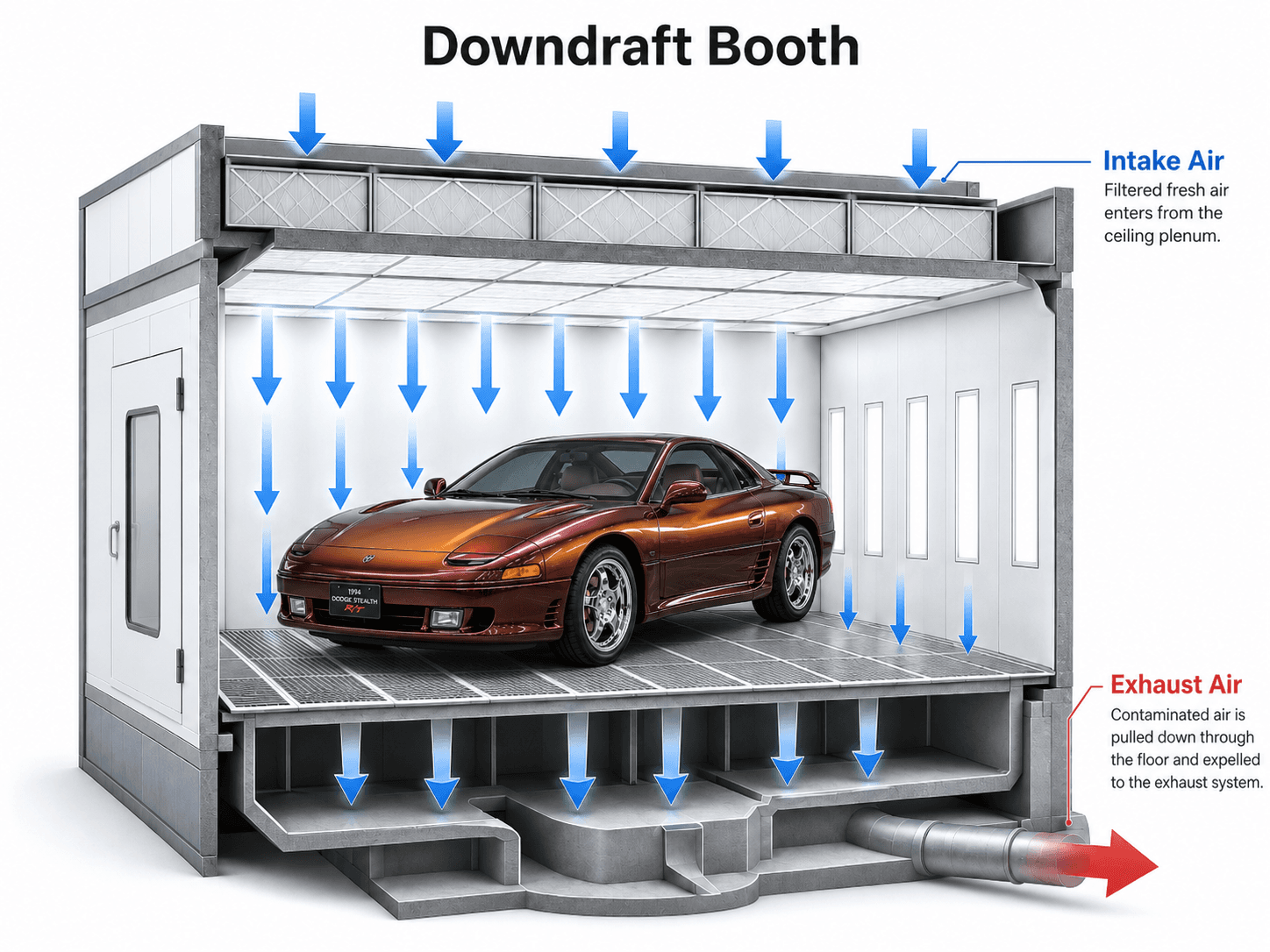

Blowtherm · Downdraft
Blowtherm BITA 8.0 Meter
Filter kit, alternatives, and current pricing for the BITA 8.0 Meter.
Required filters
Recommended kit for this booth
2 matched filters across 3 slots.
Complete kit total · $560.02
Intake side (clean air going in) (2 slots)
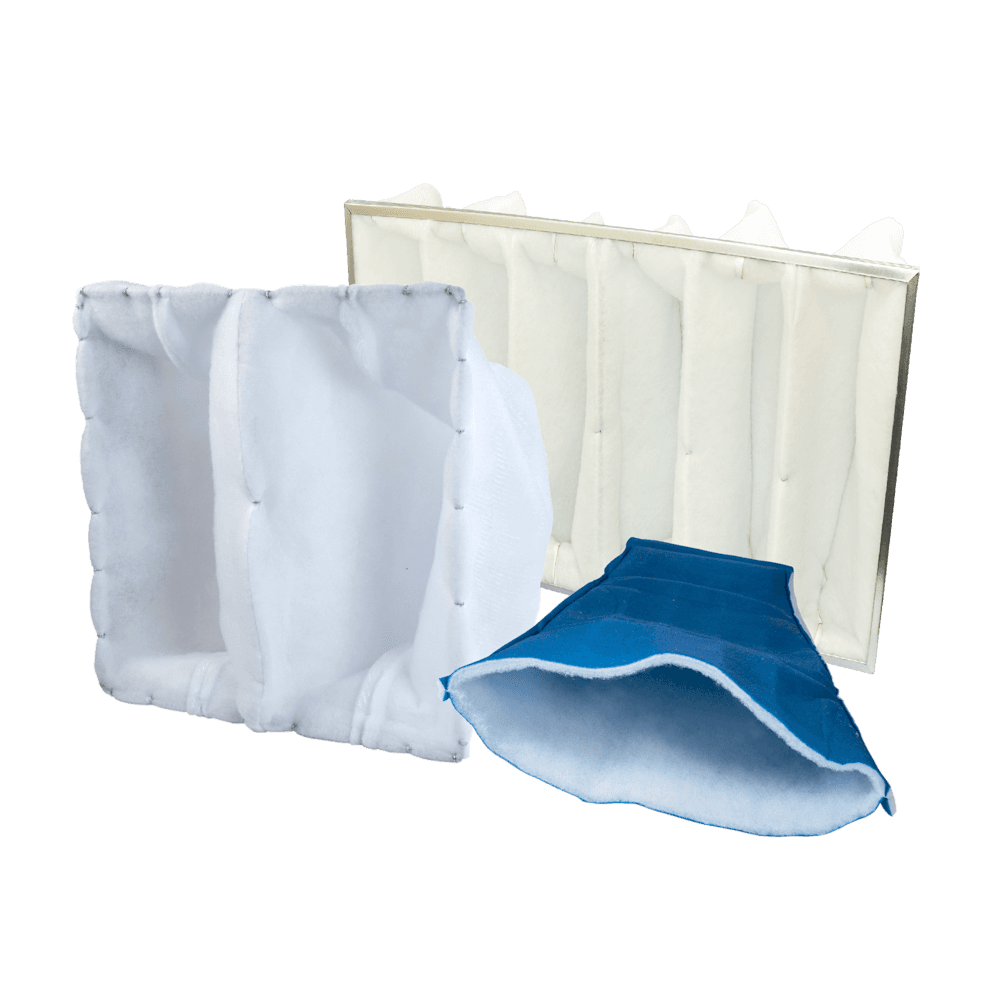
AMU pre-filter
AMU pocket bag pre-filter · 23.25x47x8
Special order · 1–2 weeksViledon F45A 1/1 High Performance Pocket Filter
BFP-PB-VILEDON-F45A· 60–90 day cycleWas $349.44$297.02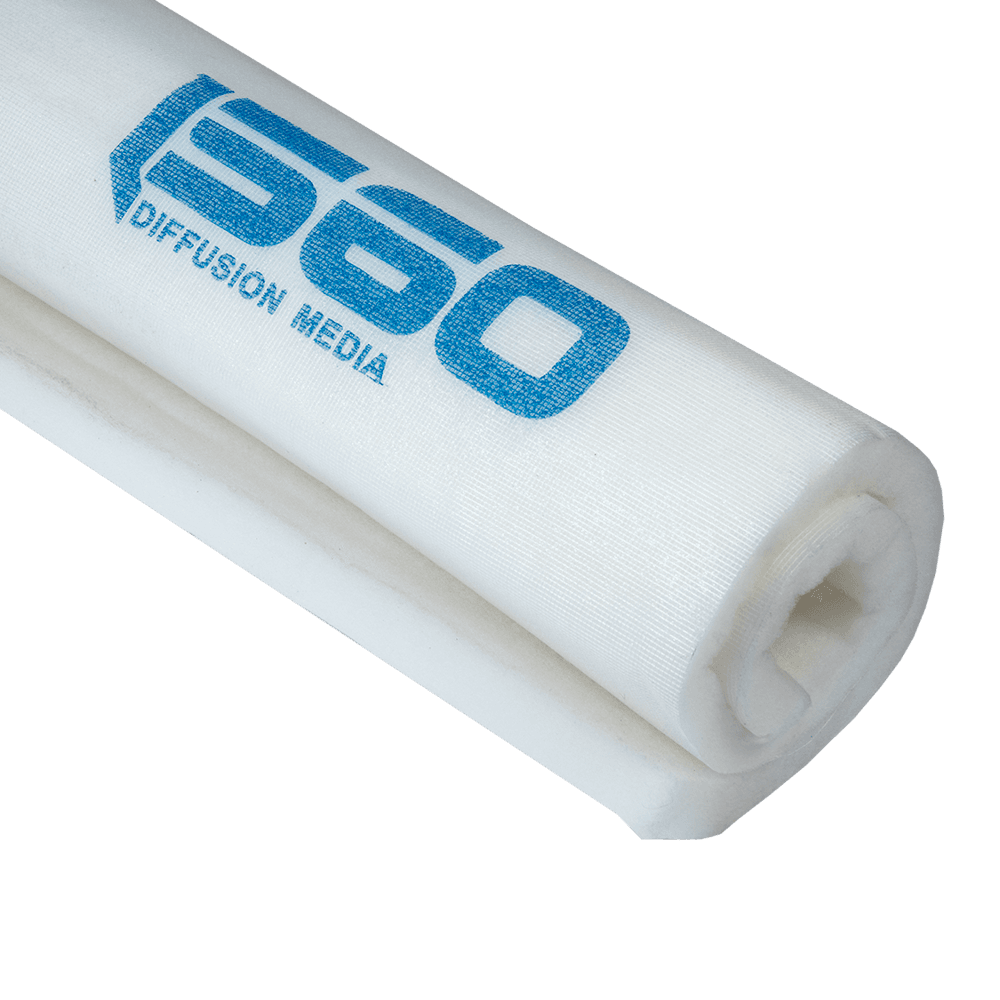
Ceiling intake
Ceiling diffusion polyester · 78x134
Special order · 1–2 weeksFiltrair FF560GX 78x134 Ceiling Diffusion (PA560G-10), Blowtherm 8.0m
BFP-CD-FILTRAIR-FF560-78134· 30–60 day cycleQuote on request
Exhaust side (overspray coming out) (1 slot)

Pit exhaust
Fiberglass exhaust arrestor · 30x300ft
Special order · 1–2 weeksAFT 22-gram Fiberglass Roll 30x300ft
BFP-FG-AFT-22G-30R· 7–14 day cycleWas $309.41$263.00
Not finding the right match?
We carry many filters beyond what's shown here. Tell us about your booth and we'll send you a price and ship ETA within one business day.
Don't see your filter? Request a quote →Blowtherm model • BITA 8.0 Meter
Blowtherm BITA 8.0 Meter Filter Fitments
Booths this size are bought with a spreadsheet, and their filters should be too. An 8 meter downdraft exists to paint what standard cabins cannot, and every extra meter of cabin is bought twice: once in steel, then again every year in media area. The BITA 8.0 meter's four-section ceiling at 78 x 134 is a bigger intake plane than its 7.5 meter sibling carries, which means each ceiling change costs more but also that skimping shows up faster, as uneven downdraft over a long cabin. The economics favor buying the ceiling as a matched four-section set on a predictable cadence instead of section by section when someone remembers.
Quick answer
Filter spend on the Blowtherm BITA 8.0 meter is dominated by its ceiling: the AFT catalog that surfaced this model documents four ceiling sections at 78 x 134, a large intake media plane befitting an 8 meter (roughly 26 foot) downdraft cabin. Add pit exhaust media under the floor grating and, on most Blowtherm installations, an AMU prefilter stage, and you have the full consumables list. The ceiling size is catalog-documented and orderable; pit and AMU positions are confirmed per installation with a fitment check before any bulk order.
How BITA 8.0 Meter shops choose filters
Cycle math. Treat the booth as three ledger lines. The ceiling set is the big periodic spend: changed as a complete set so the intake plane loads evenly, on a cadence driven by finish quality and visible loading. Pit exhaust media is the frequent spend: it takes the overspray load and cycles on manometer reading. The AMU prefilter is the cheap insurance line: it protects the heater and blower, and it is the worst place to save money because AMU repairs dwarf a year of prefilter bags.
Intake side. Four sections, 78 x 134, per the AFT catalog record. Diffusion media across that plane is what turns heated makeup air into even, clean downdraft over a long cabin. Mixed old and new sections create velocity bias toward the fresh media, so partial changes cost finish quality.
Exhaust side. The pit run under an 8 meter grating is long, loads heaviest under the work zone, and is the stage EPA capture-efficiency numbers depend on. Dimensions vary by installation, so this position is locked during your fitment check, along with the AMU prefilter style (some older Blowtherm units run headerless frames).
Regulatory landscape
Scale raises the stakes but not the rules. EPA 6H requires spray booth filter technology achieving at least 98 percent capture efficiency for target HAP coatings, met at the exhaust stage and maintained through timely change-outs. OSHA 1910.94(c) requires the ventilation system to keep pulling design airflow; on a cabin this long, a half-blinded pit shows up as dead air pockets mid-booth before the fan sounds different. NFPA 33 covers the fuel you are storing in the pit as media loads with overspray. Delivery records from a standing kit schedule are the cheapest compliance documentation you can own.
Who runs the BITA 8.0 Meter
The BITA 8.0 meter's installed base is commercial: fleet paint operations doing box trucks, buses, and municipal equipment, where the booth earns its footprint on volume. Second, heavy-truck collision centers, where frame-length repaints are the daily job, not the exception. Third, industrial finishers coating long fabrications and equipment that would otherwise be painted outside a booth entirely. These are shops where booth downtime is measured in missed schedule slots, so the filter program has to arrive before the manometer says it is late.
BITA 8.0 Meter filter FAQs
What is documented for this booth versus confirmed for mine?
The four-section ceiling at 78 x 134 comes from the AFT catalog record that discovered this model, so it is documented at catalog confidence. Pit exhaust and AMU prefilter details vary by installation and are confirmed against your booth by the WERCS service team during a fitment check before bulk ordering.
Can I stretch the ceiling set by replacing two sections at a time?
You can, but it is false economy on a downdraft this long. New sections pass more air than loaded ones, so the downdraft goes uneven and the finish pays for it over the loaded half of the cabin. Change the ceiling as a matched set and put the savings effort into the pit cadence instead.
How does the 8.0 meter compare to the 7.5 meter for filter spend?
Same architecture, bigger intake plane: the 8.0 meter's documented ceiling sections are 78 x 134 against the 7.5 meter's 68.5 x 134, four sections either way. Budget the ceiling line higher and expect the longer pit run to consume proportionally more exhaust media.
Which position protects the equipment rather than the paint job?
The AMU prefilter. It keeps dust and debris off the heater and blower in the air makeup unit, and on some older Blowtherm units it is a headerless style, so confirm the frame type before ordering. Ceiling media protects the finish; pit media protects compliance and airflow.
Is there a sensible change trigger for the pit on a high-volume schedule?
Manometer reading, checked as part of the daily open-up, beats any calendar interval. High-volume shops load the pit unevenly under the work zone, so pair the gauge with a weekly walk of the full grating and change when the reading crosses your booth's marked change point.
Sources
Primary references cited on this page.
- EPA 40 CFR Part 63 Subpart HHHHHH (NESHAP 6H)https://www.epa.gov/stationary-sources-air-pollution/national-emissions-standards-paint-stripping-and-miscellaneous
- OSHA 29 CFR 1910.94(c), Ventilation: spray finishing operationshttps://www.osha.gov/laws-regs/regulations/standardnumber/1910/1910.94
- NFPA 33, Standard for Spray Application Using Flammable or Combustible Materialshttps://www.nfpa.org/codes-and-standards/nfpa-33-standard-development/33
Related on BoothFilterPro
- All Blowtherm models
Brand hub
- BITA 7.5 Meter
Sibling Blowtherm model
- World
Sibling Blowtherm model
- Extra
Sibling Blowtherm model
- World/S
Sibling Blowtherm model
- Space
Sibling Blowtherm model