Rohner · Powder booth
Rohner Batch Non-Recovery Powder Booth
Filter kit, alternatives, and current pricing for the Batch Non-Recovery Powder Booth.
Rohner model • Batch Non-Recovery Powder Booth
Rohner Batch Non-Recovery Powder Booth Filter Fitments
Non-recovery is a deliberate economic choice, and it shapes everything about how this booth consumes filters. Shops pick a batch non-recovery booth when they run many colors in short runs, when reclaimed powder would be cross-contaminated anyway, or when the labor of cartridge cleanout costs more than the powder it saves. Rohner's version is a batch chamber sized for cart or hang-rack work, with the STW-8-10-6 as the representative footprint. The trade you accept: filter media does the capture job on every part, every shift, and gets thrown away loaded.
Quick answer
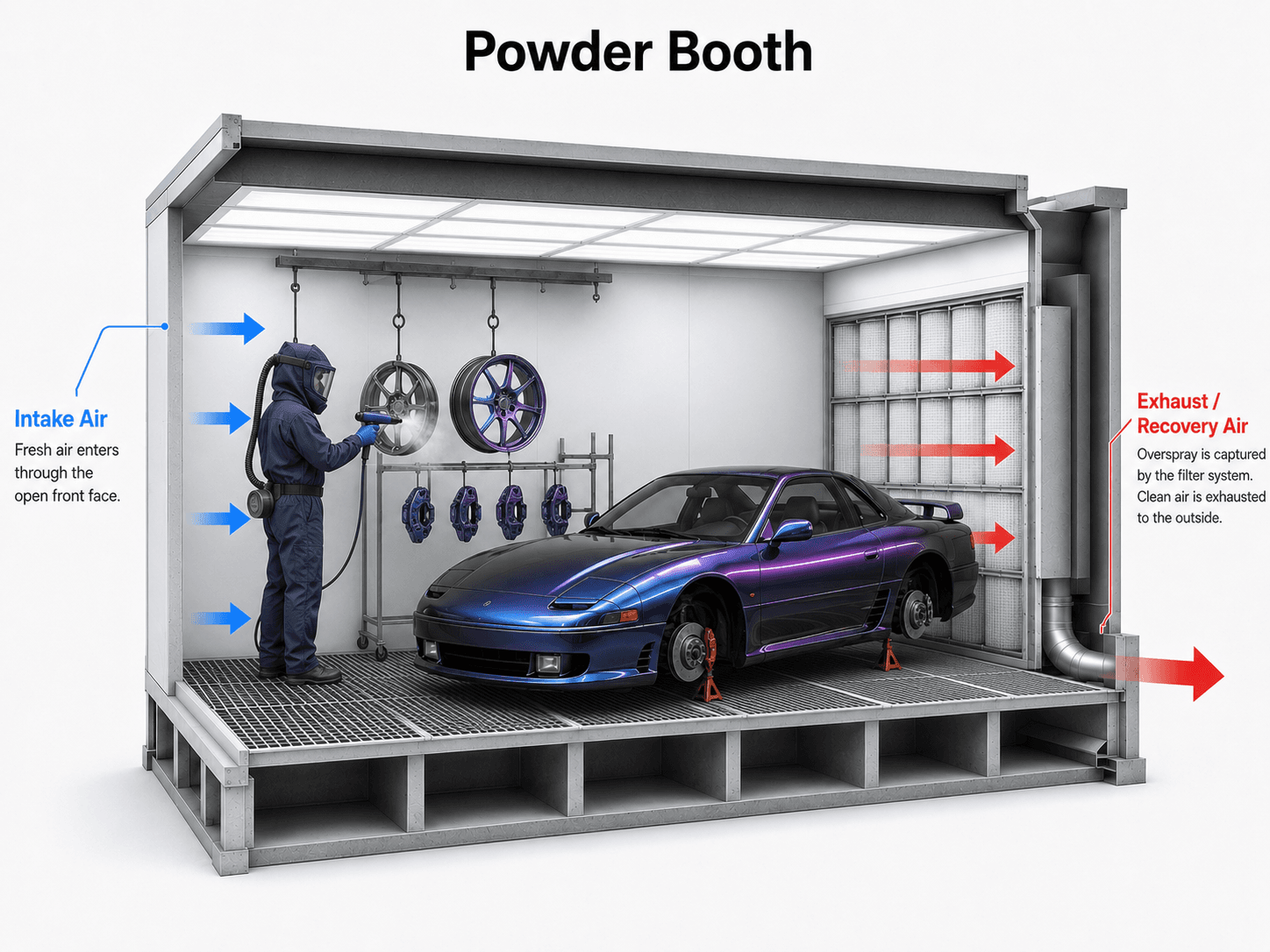
The Rohner Batch Non-Recovery Powder Booth is a single-pass powder exhaust booth: oversprayed powder travels straight into the exhaust filter bank and leaves with the media, not back into the hopper. The representative STW-8-10-6 configuration runs an 8 foot wide by 10 foot high by 6 foot deep working chamber at 8,000 CFM on a 3 HP fan, and Rohner builds the booth as a sized family around that layout. Because overspray is discarded rather than reclaimed, the exhaust media is the entire consumable story. This is a catalog-documented model, so confirm exact media sizes with a fitment check or quote before ordering in bulk.
How Batch Non-Recovery Powder Booth shops choose filters
Exhaust side. In a non-recovery layout the exhaust bank is the capture system, full stop. There is no cartridge reclaim stage pulling powder out of the airstream first, so the exhaust media takes the entire overspray load at the booth's full 8,000 CFM draw. Expect a staged arrangement: a sacrificial first-stage arrestor holding the bulk of the powder ahead of a finer final stage that protects the fan and discharge air. Because Rohner sizes this booth as a family around the STW-8-10-6, media counts and panel dimensions shift with the configuration, so we quote media against your specific booth rather than publishing a one-size panel list.
Cycle math. Powder loads media by weight quickly: a heavy spray day can visibly cake the first stage. Watch static pressure rather than the calendar. When draw at the face weakens and powder starts drifting back at the operator, the first stage is done. Shops that standardize an interval do it by parts throughput, not weeks.
Buying pattern. Since media is consumed on every run, this booth suits a standing replenishment order more than almost any liquid booth does. Get sizes confirmed once through a fitment check, then put the first-stage media on an automatic cadence.
Regulatory landscape
Powder coating sits in a different regulatory lane than liquid spray. EPA's NESHAP 6H rule (40 CFR 63 Subpart HHHHHH) targets spray-applied coatings containing specific metal HAPs, and powder application generally falls outside its spray-application scope. OSHA's ventilation standard, 29 CFR 1910.94(c), still governs the booth: adequate draw at the opening, maintained exhaust filtration, and no contaminated air returned to the workspace. NFPA 33 addresses powder application as well, and the fire-safety concern with powder is combustible dust. Loaded exhaust media holding pounds of organic powder is a fuel package: change it on schedule and get it out of the building promptly.
Who runs the Batch Non-Recovery Powder Booth
Three kinds of operations run batch non-recovery booths. Job shops with high color counts, where a dozen colors a week make reclaim pointless and fast color change is the whole business case. Fabricators powder coating their own product lines in batches, where the booth runs a few hours a day and simplicity beats reclaim plumbing. And maintenance or fleet operations that coat racks, frames, and hardware intermittently, where a straightforward exhaust booth with disposable media is easier to own than an idle recovery system.
Batch Non-Recovery Powder Booth filter FAQs
What is the difference between non-recovery and recovery powder booths for filters?
A recovery booth pulls oversprayed powder out of the airstream with reclaim cartridges so it can be sieved and sprayed again; the cartridges are semi-permanent and pulse-cleaned. A non-recovery booth skips reclaim entirely: overspray goes into disposable exhaust media and is discarded with it, so the booth consumes media continuously instead of consuming cartridges slowly.
How often should I change the exhaust media on this booth?
By loading, not by date. Monitor static pressure across the exhaust bank, or simply watch draw at the booth opening: when powder capture weakens or drifts back toward the operator, change the first stage. Throughput drives the interval, not the calendar.
Can I get exact filter panel sizes for my Rohner non-recovery booth right now?
We can quote them, but confirm before bulk ordering. This model is documented from Rohner's catalog and sold as a sized family around the STW-8-10-6, so panel counts and dimensions vary by configuration. Send your booth size or nameplate through a fitment check and we will match media to your exact frame layout before you commit.
Is loaded powder filter media hazardous waste?
Usually not, but it depends on the powder chemistry, so check the SDS and your state's disposal rules. The more immediate concern is fire safety: loaded media is combustible dust bound to a filter blanket. Bag it and move it out of the building on the same schedule you change it.
Does a powder booth like this fall under EPA 6H?
Generally no. NESHAP 6H is written around spray-applied liquid coatings containing target metal HAPs, and powder coating typically falls outside its spray-application definition. You still carry OSHA 1910.94(c) ventilation obligations and NFPA 33 fire-safety requirements.
Sources
Primary references cited on this page.
- Rohner Batch Non-Recovery Powder Booth manufacturer product pagehttps://www.rohnerspraybooths.com/powder-coating-booths/batch-non-recovery-booth/
- OSHA 29 CFR 1910.94(c), Ventilation: spray finishing operationshttps://www.osha.gov/laws-regs/regulations/standardnumber/1910/1910.94
- NFPA 33, Standard for Spray Application Using Flammable or Combustible Materialshttps://www.nfpa.org/codes-and-standards/nfpa-33-standard-development/33
Related on BoothFilterPro
- All Rohner models
Brand hub
- Rohner Side Downdraft
Sibling Rohner model
- Rohner Open Front Booth
Sibling Rohner model
- Rohner Custom Crossdraft
Sibling Rohner model
- Rohner Custom Downdraft
Sibling Rohner model
- Paint Mixing Room
Sibling Rohner model