Col-Met · Crossdraft
Col-Met EZ Classic Crossdraft
Filter kit, alternatives, and current pricing for the EZ Classic Crossdraft.
Fitment data is being verified. Our team is still cross-referencing manufacturer specs for the EZ Classic Crossdraft. Confirm filter sizes with WERCS before ordering: request a fitment confirmation.
Col-Met model • EZ Classic Crossdraft
Col-Met EZ Classic Crossdraft Filter Fitments
The EZ series is Col-Met's straightforward booth line, and the Classic Crossdraft is its simplest airflow: one fan pulling air the length of the cabin. Shops buy it to get spraying legally without a pit, a plenum ceiling, or a long install. The compliance trap with entry-level booths is not the booth, it is the habit that grows around it. Because the EZ Classic is inexpensive to run, its filters are often treated as an afterthought, and every regulatory obligation the booth carries lives in exactly those filters. Run the two positions on a real cadence and this cabin passes the same inspections the expensive booths do.
Quick answer
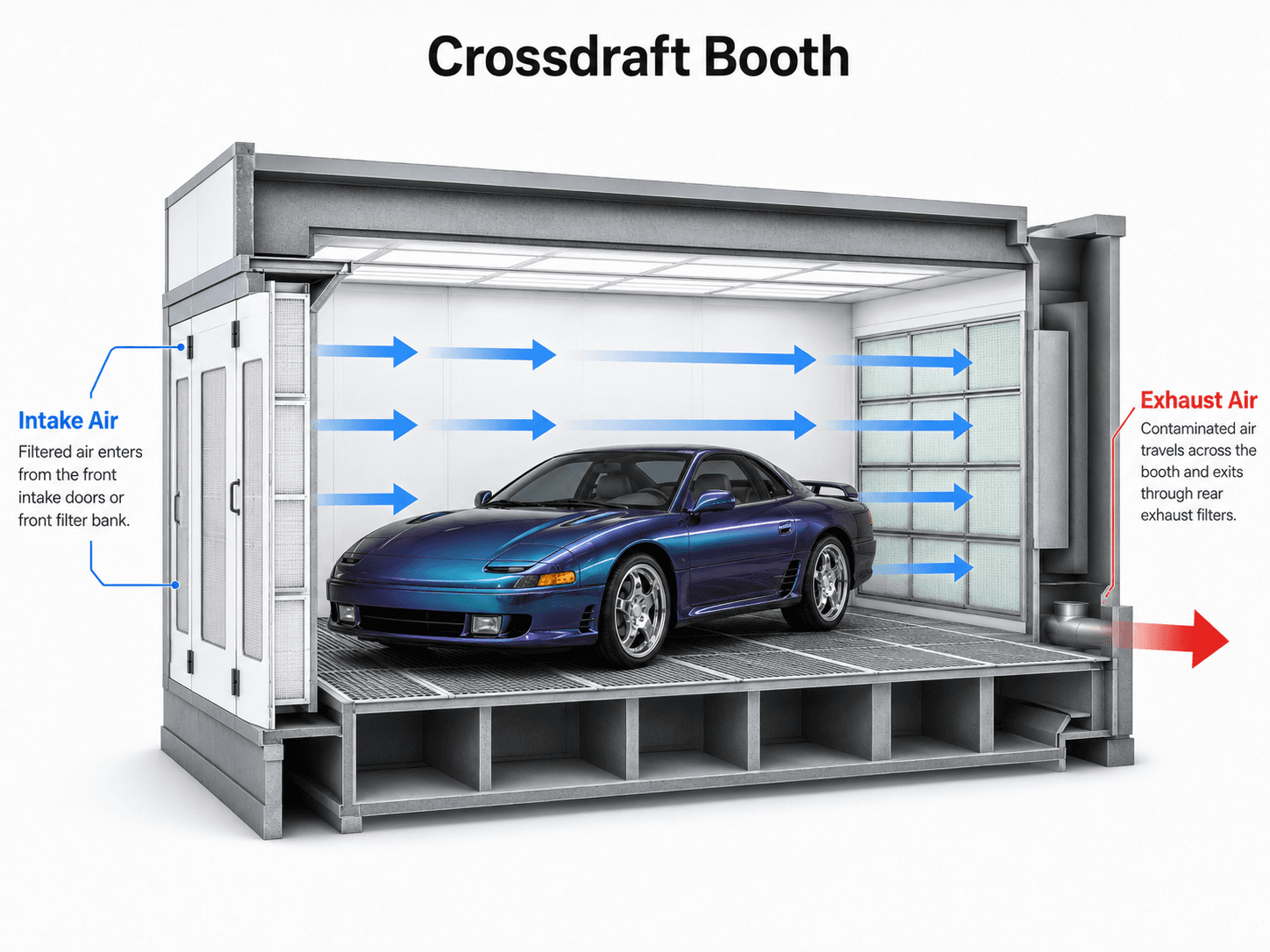
EPA 6H does not grade on price point, and the Col-Met EZ Classic Crossdraft satisfies it the same way a six-figure downdraft does: with a specified, maintained exhaust filter bank. This is Col-Met's classic cross flow cabin (Col-Met is now part of RTT, Reliable Truck Tools): intake media at the entry face, horizontal airflow past the vehicle, arrestor media across the exhaust wall. Two filter positions, both stocked media types. Our EZ Classic record is pending verification, so exact panel counts and sizes are confirmed with a fitment check before your first kit ships.
How EZ Classic Crossdraft shops choose filters
Intake side. Entry-face intake panels are the finish-quality stage: they filter the shop air that will travel horizontally across your wet paint. Tacky polyester panel media is the standard fill. In a crossdraft, intake media quality matters more than owners expect, because there is no top-down air curtain to push stray dust off the panel; whatever gets in rides the airflow straight across the vehicle.
Exhaust side. The exhaust wall arrestor bank takes the booth's entire overspray load and is the position regulators care about. Fiberglass arrestor pad is the baseline; polyester arrestor is the step up when higher-solids coatings load fiberglass too fast. This bank blinds from the middle outward, in line with where the work sits, so inspect the center pads, not the corners.
Change triggers. A manometer across the exhaust bank is cheap and definitive: change at your marked pressure point. Without one, the fallback signs are overspray drifting back toward the painter and visibly caked center pads. Fitment sizes for both positions are confirmed by the WERCS service team on your first order, since the EZ Classic record in our catalog is still marked needs-verification.
Regulatory landscape
Three frameworks meet at this booth's exhaust wall. EPA 6H requires spray-applied coatings containing target HAPs to pass through filter technology achieving at least 98 percent capture efficiency, and a maintained two-stage arrestor bank is the normal way a crossdraft demonstrates it. OSHA 1910.94(c) requires spray areas to maintain ventilation that keeps vapors and mists moving away from the operator, which is a filter-loading question as much as a fan question. NFPA 33 treats the loaded bank as combustible fuel and expects scheduled removal and safe disposal. None of these care what the booth cost. Dated filter delivery records answer most inspector questions before they are asked.
Who runs the EZ Classic Crossdraft
The EZ Classic's natural owners are startup and small collision shops getting their first compliant booth, where the purchase decision was budget and the operating decision is discipline. Second, fleet and ag operations painting trucks, trailers, and implements where crossdraft airflow fits the finish standard and the volume is steady. Third, industrial job shops that added the booth to bring outsourced coating in-house. In all three, the booth usually runs more hours than the buyer planned, so the filter cadence set in month one is either an asset or a slow-building violation.
EZ Classic Crossdraft filter FAQs
What filters does a Col-Met EZ Classic Crossdraft use?
Two positions: intake panel media at the entry face and overspray arrestor media across the exhaust wall. Both are standard stocked media types; the panel counts and dimensions for your specific cabin get confirmed during the fitment check, since our record for this model is still in verification.
Is this booth actually enough for EPA 6H compliance?
The airflow layout is not the issue; the filter maintenance is. 6H requires demonstrated 98 percent capture efficiency at the exhaust stage plus filters kept in serviceable condition, and a properly maintained arrestor bank on the EZ Classic meets that the same way a downdraft's pit media does.
Why do my exhaust pads load faster in the middle of the wall?
Because overspray follows the work. The vehicle sits centered in the airflow path, so the center of the bank takes the densest load while corner pads stay comparatively clean. Judge change timing by the center pads or a manometer reading, never by the corners.
Col-Met was bought by RTT. Does that affect my filter supply?
No. Col-Met is now part of RTT (Reliable Truck Tools), but the booth in your building, its filter positions, and its frame sizes have not changed. Our fitment check documents your cabin directly, so brand ownership changes never touch your kit.
What should I send for the fitment check on this model?
Counts and measurements of the intake panels and exhaust wall pads, plus a photo of each face if you can. That is enough for the WERCS service team to verify sizes against the EZ series and lock a confirmed kit to your account, after which reorders are one click.
Sources
Primary references cited on this page.
- Col-Met EZ Classic Crossdraft manufacturer product pagehttps://colmetsb.com/
- EPA 40 CFR Part 63 Subpart HHHHHH (NESHAP 6H)https://www.epa.gov/stationary-sources-air-pollution/national-emissions-standards-paint-stripping-and-miscellaneous
- OSHA 29 CFR 1910.94(c), Ventilation: spray finishing operationshttps://www.osha.gov/laws-regs/regulations/standardnumber/1910/1910.94
- NFPA 33, Standard for Spray Application Using Flammable or Combustible Materialshttps://www.nfpa.org/codes-and-standards/nfpa-33-standard-development/33
Related on BoothFilterPro
- All Col-Met models
Brand hub
- Standard Downdraft
Sibling Col-Met model
- Value Crossdraft 8191
Sibling Col-Met model
- Standard Crossdraft
Sibling Col-Met model
- Open Face Paint Booth
Sibling Col-Met model
- Standard Semi-Downdraft
Sibling Col-Met model